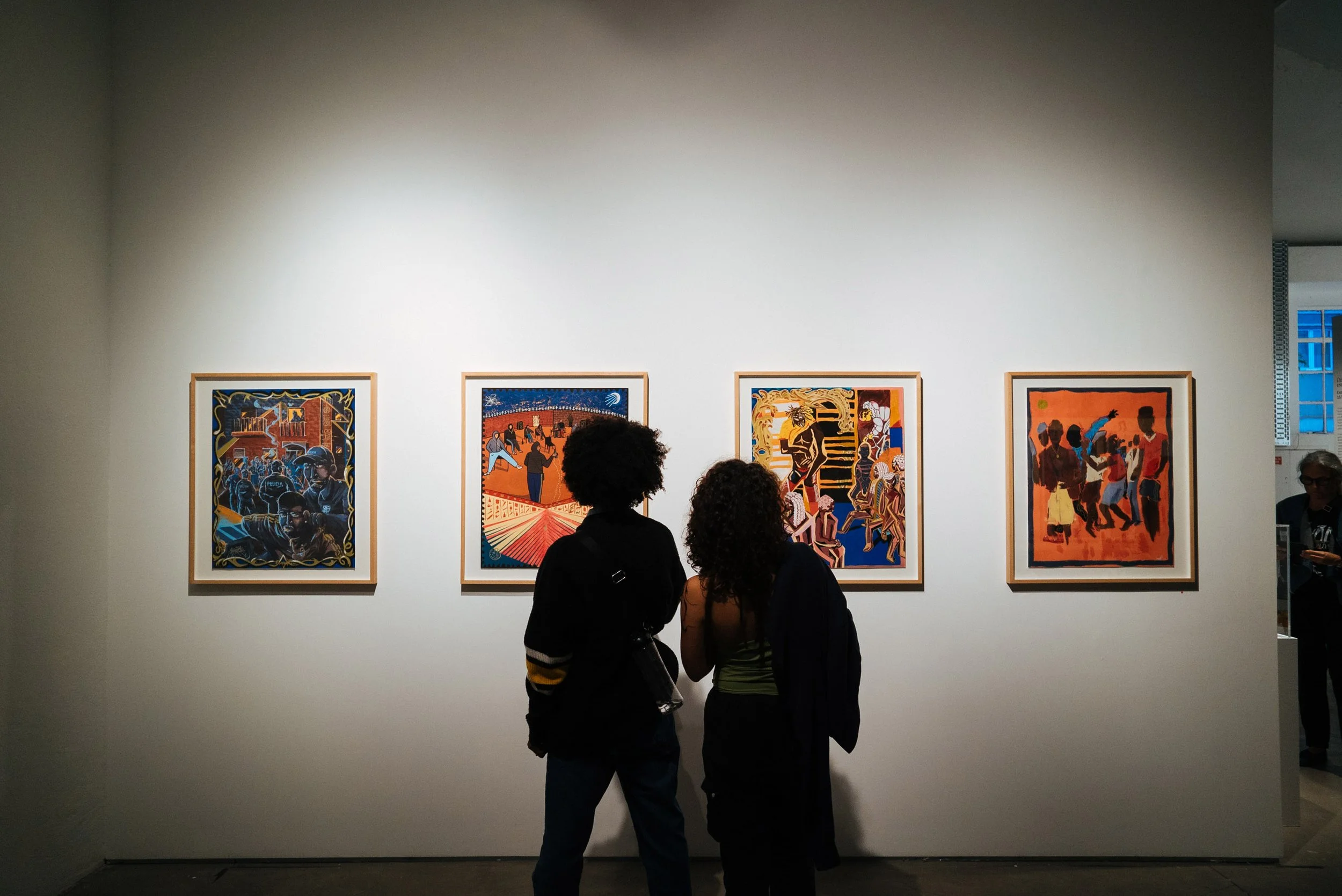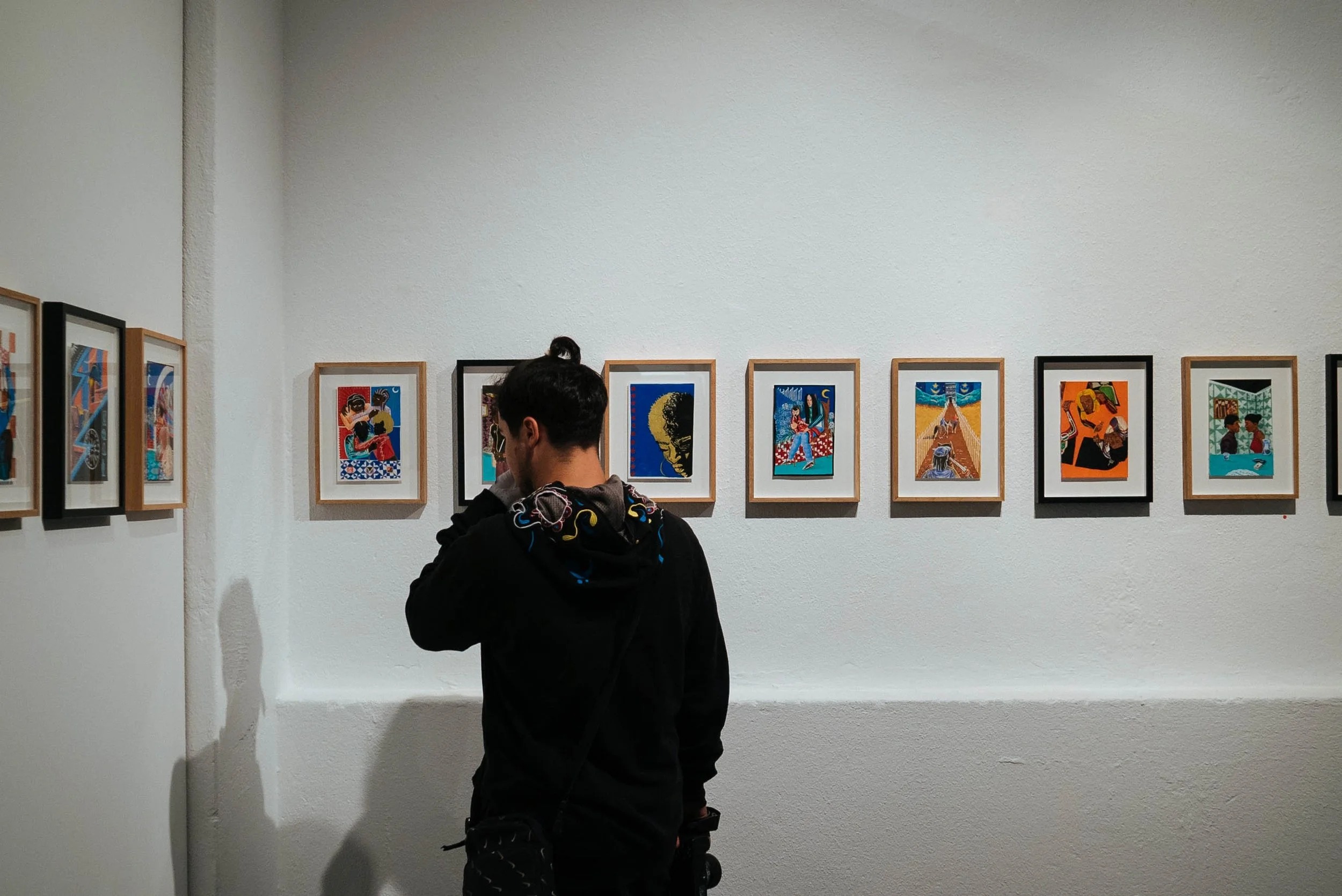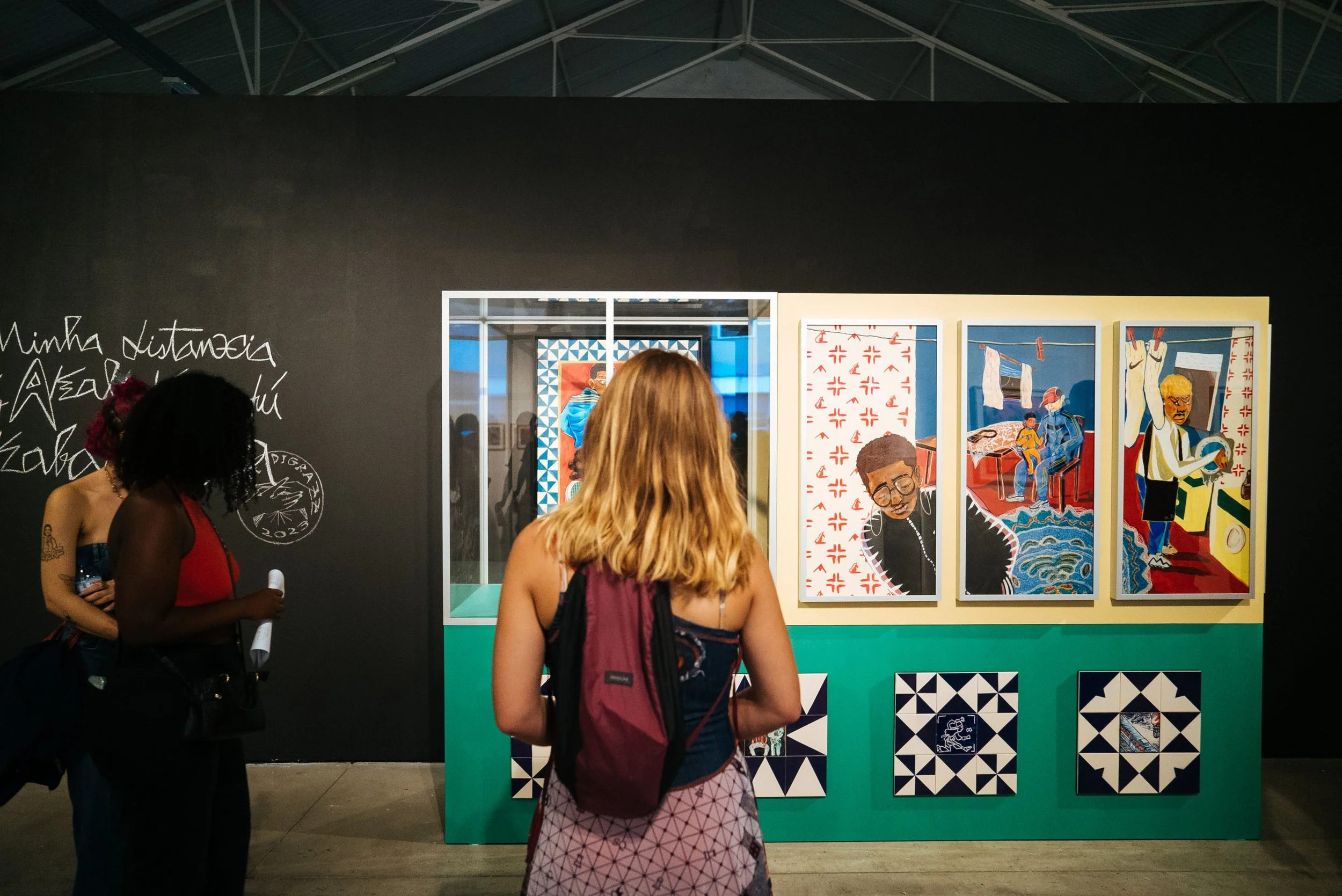
Em Distante, o coletivo Unidigrazz confronta o público com uma exploração das narrativas complexas inerentes à dicotomia periferia-centro, representada pelos 33 minutos de viagem entre as estações do Rossio e Algueirão- Mem Martins, na Linha de Sintra. Uma viagem de comboio aparentemente breve, transformada em metáfora e carregada de significado, revelando profundas divisões entre realidades contrastantes e destinos desiguais.
A partir das vivências reais e pessoais dos membros que compõem o coletivo, a exposição incorpora uma visão criativa multifacetada, desafiando perceções convencionais através de um choque frontal com a segregação que dá forma às perspetivas urbanas. Evidenciando muito mais que a distância geográfica entre territórios, Distante reflete sobre a desigualdade que permeia a sociedade, abordando questões de mobilidade, cultura, educação, habitação, documentação, violência policial e racismo. Aqui, o coletivo revela os abismos entre realidades distintas, contando histórias que ecoam a sua própria marginalização, assim como a sua realidade enquanto grupo de artistas que procura redefinir a narrativa do local onde vive.
Incluindo trabalhos em desenho e pintura, assim como intervenções em técnica mista, destaca-se uma instalação em grande-escala titulada Marquizz. Presente na exposição enquanto espaço literal de expressão, é uma representação da vida nas periferias urbanas, da intimidade e dos laços familiares, simbolizando também a ligação entre o ambiente doméstico e o espaço público.
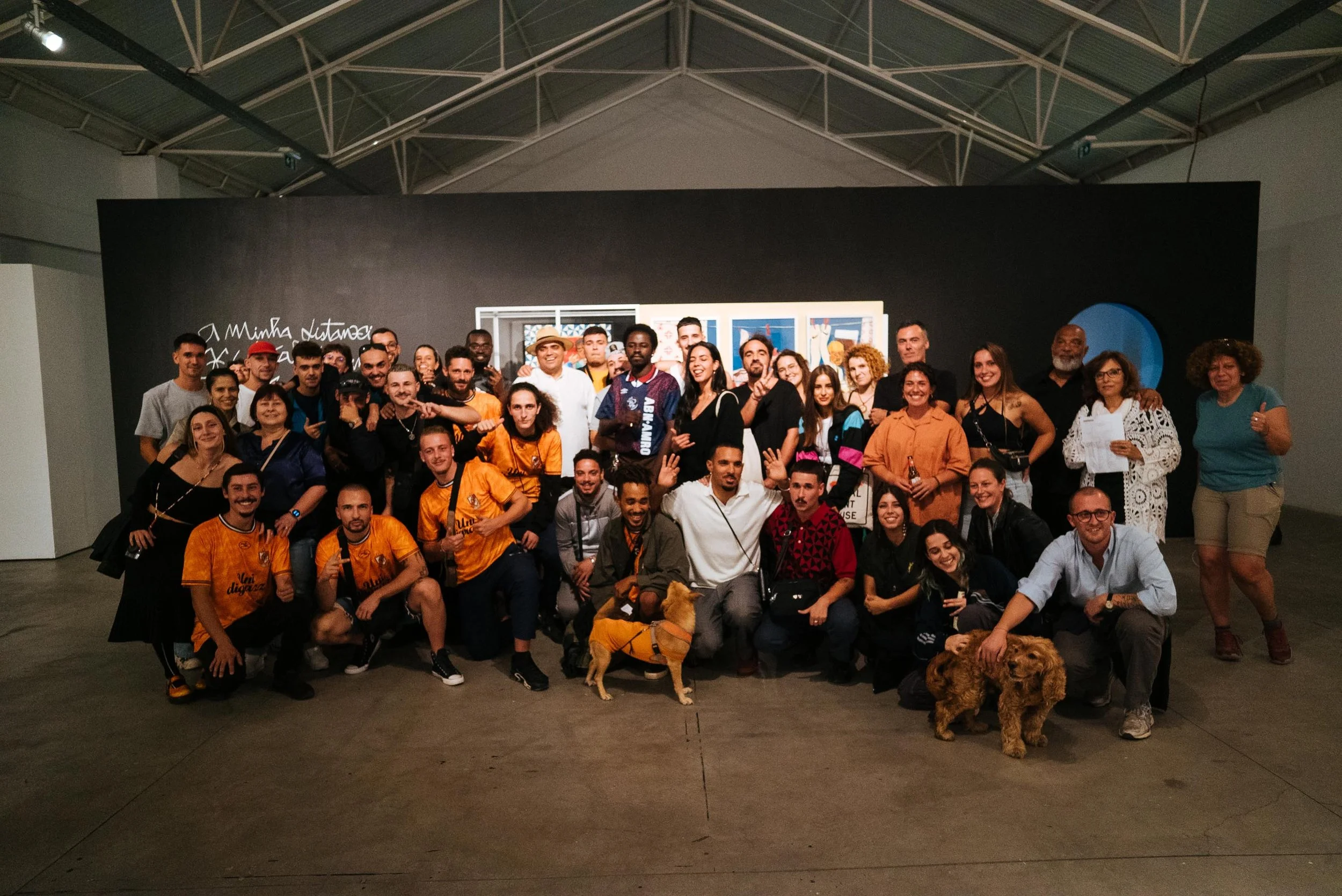
Distante é, na sua essência, uma exploração cativante, introspetiva e pessoal das experiências humanas e sociais num contexto urbano dividido. Nas palavras dos próprios artistas: Unidigrazz é uma consequência, uma continuação de algo [que já existe]; do trabalho dos rappers street, writers, poetas, de todas as mães. A arte realizada pelo coletivo relata uma época que já se viveu ou se está a viver, pela maneira de ver e criar de quem vive dentro dessa realidade. É mais do que o mundo artístico. É o que veem e vivem.
EN:
In Distante, the Unidigrazz collective confronts the public with an exploration of the complex narratives inherent to the periphery-centre dichotomy, represented by the 33-minute journey between Rossio and Algueirão-Mem Martins stations on the Sintra Line. An apparently brief train journey, transformed into a metaphor and charged with meaning, revealing profound divisions between contrasting realities and unequal destinies.
Drawing from the real and personal experiences of the collective’s members, the exhibition incorporates a multifaceted creative vision, challenging conventional perceptions through a direct confrontation with the segregation that shapes urban perspectives. Highlighting far more than the geographical distance between territories, Distante reflects on the inequality that permeates society, addressing issues of mobility, culture, education, housing, documentation, police violence, and racism. Here, the collective reveals the gaps between distinct realities, telling stories that echo their own marginalisation, as well as their experience as a group of artists seeking to redefine the narrative of the place they call home.
Featuring works in drawing and painting, as well as mixed-media interventions, the exhibition’s large-scale installation Marquizz stands out. Present in the exhibition as a literal space for expression, it represents life in urban peripheries, intimacy, and family bonds, while also symbolising the connection between the domestic environment and public space.
At its core, Distante is a compelling, introspective, and personal exploration of human and social experiences within a divided urban context. In the words of the artists themselves: “Unidigrazz is a consequence, a continuation of something [that already exists]; of the work of street rappers, writers, poets, of all mothers. The art created by the collective tells the story of a time that has already been lived or is still being lived, through the way those who live within that reality see and create. It is more than the art world. It is what they see and what they live.